

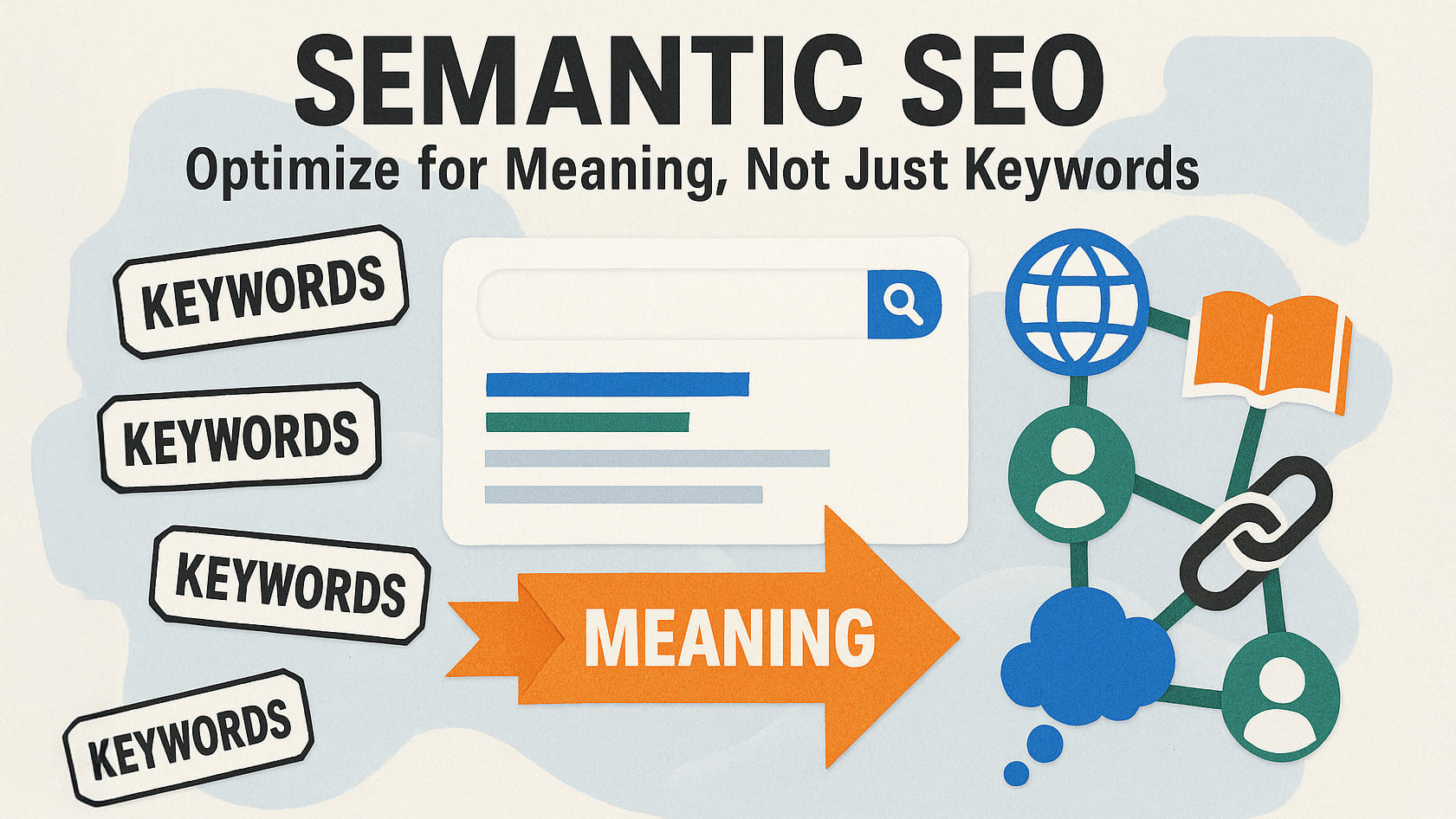
Semantic SEO is transforming how websites rank in 2026. Imagine searching “best SEO strategies for small businesses” and seeing an AI-generated overview at the top of Google—complete with summaries, citations, and follow-up questions—pulling from the most authoritative sources. Your site gets featured prominently because it doesn’t chase single keywords; it dominates the entire topic through interconnected topic clusters that prove deep expertise.
This is the new reality of search. With Google’s AI Overviews now appearing in over 20% of queries (and growing), traditional tactics fall short. Semantic SEO, combined with strategic topic clusters, signals unmatched topical authority to both Google’s core algorithm and its AI systems like Gemini and MUVERA.
In this comprehensive guide (updated January 2026), you’ll master semantic SEO fundamentals, understand its evolution amid recent updates, and get a proven blueprint to build topic clusters that drive explosive organic growth—for beginners and seasoned business owners alike.
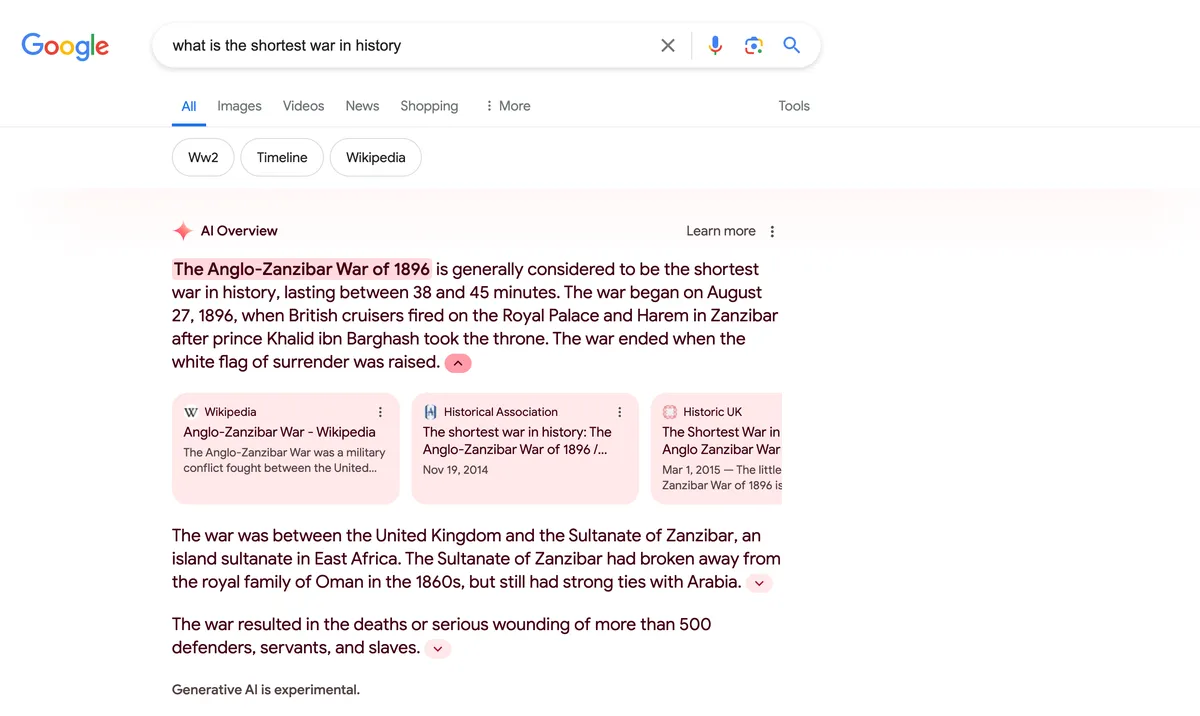
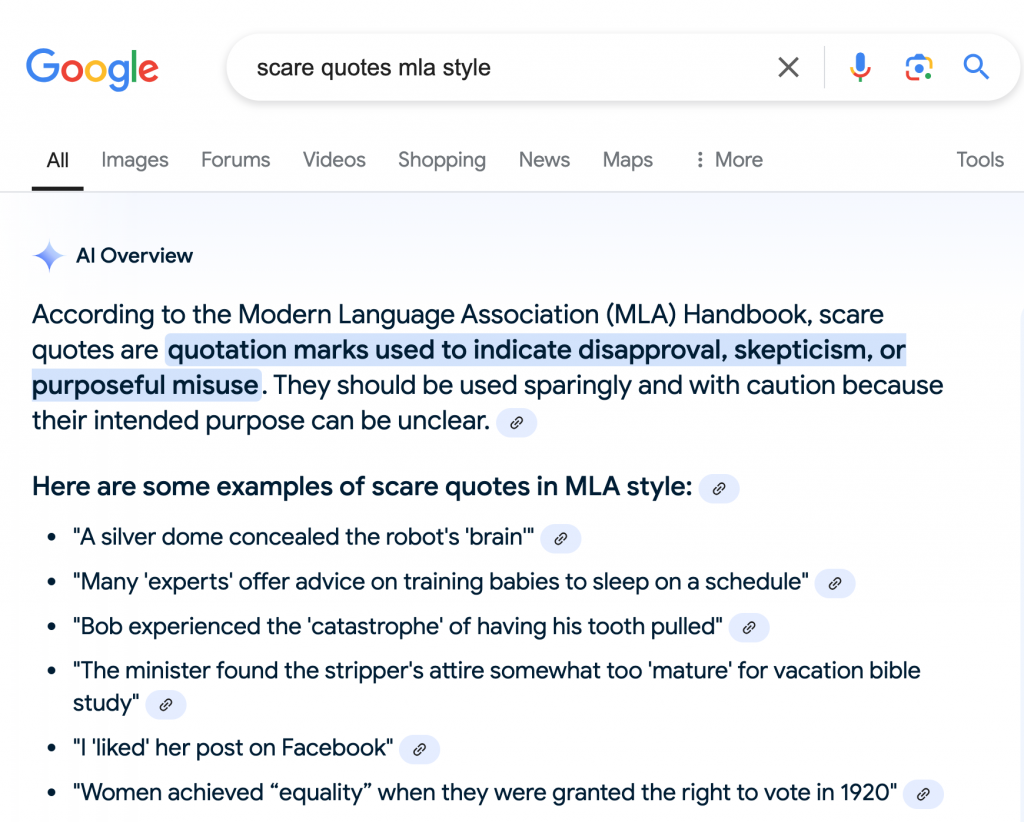
What Is Semantic SEO? The 2026 Definition You Need
Semantic SEO optimizes content around topics, entities, user intent, and contextual relationships—not just isolated keywords. It aligns perfectly with how modern search engines use natural language processing (NLP) and large language models to interpret meaning, connections, and relevance.
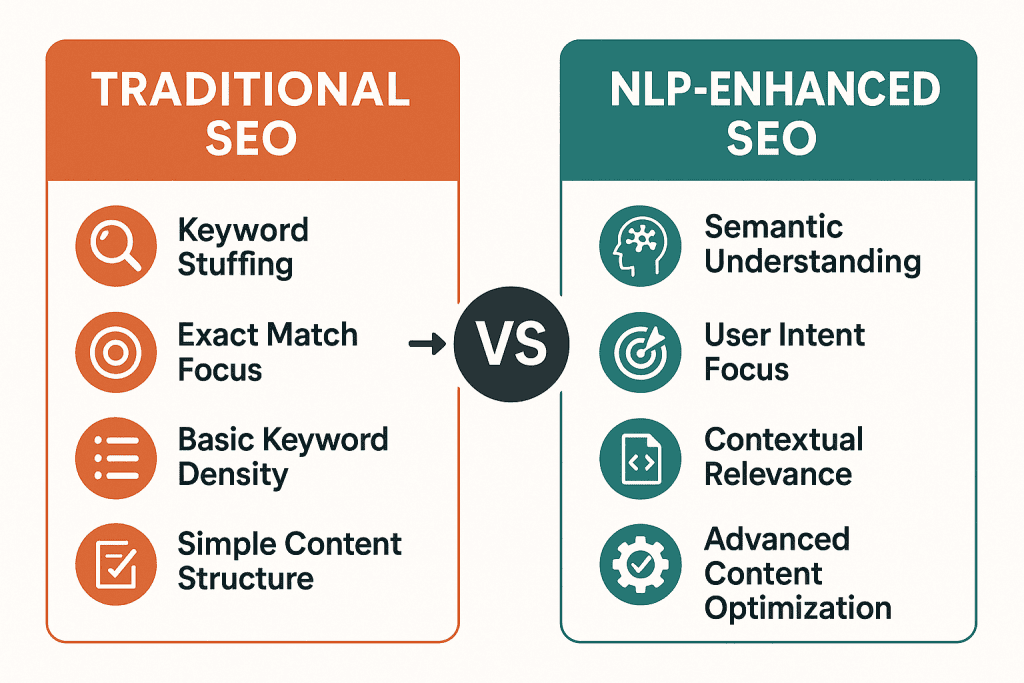
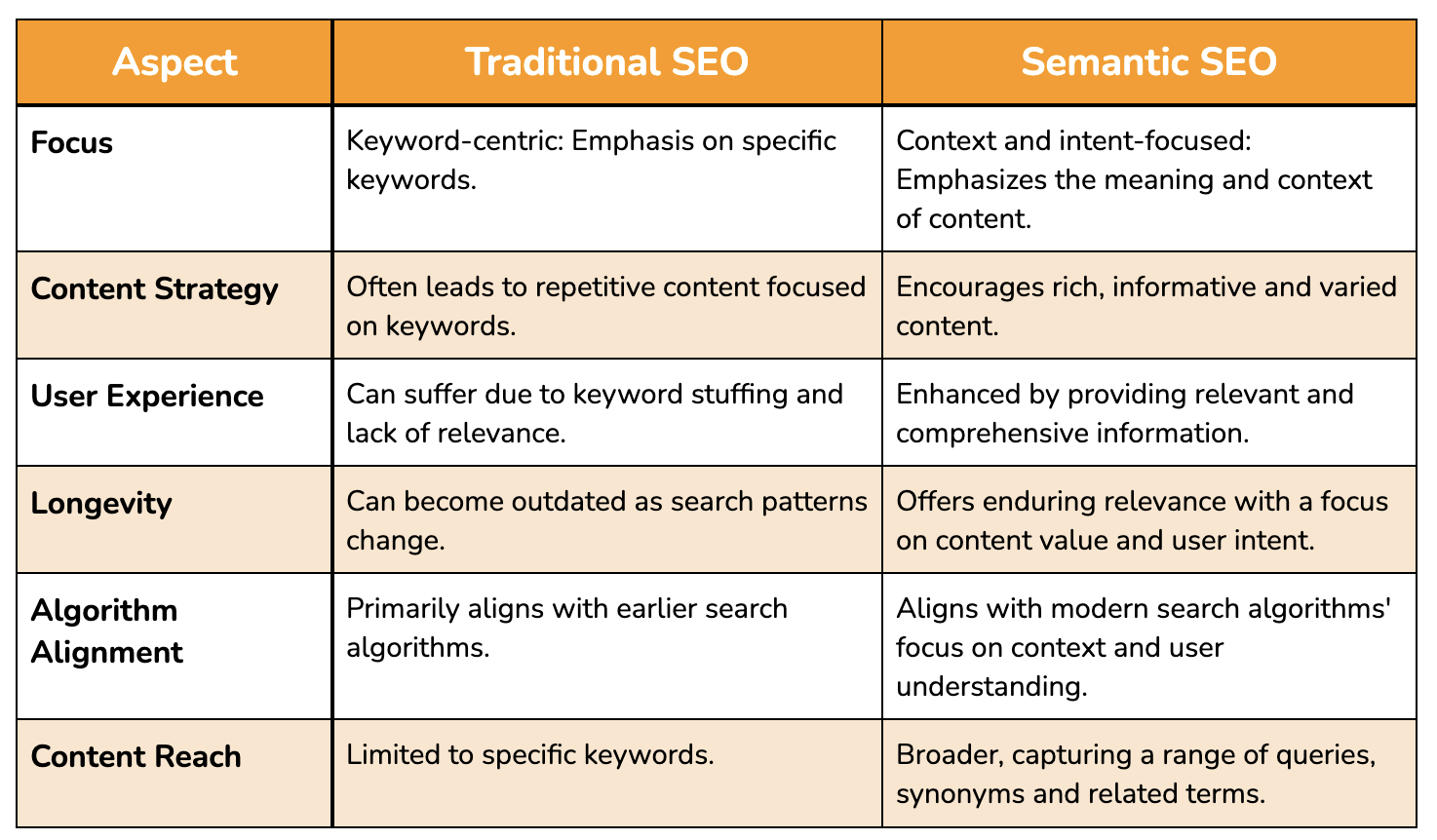
Here’s a clear comparison:
| Aspect | Traditional SEO | Semantic SEO (2026) |
| Primary Focus | Exact-match keywords & density | Topics, entities, intent & context |
| Content Approach | Isolated, keyword-stuffed pages | Interconnected clusters with depth |
| Key Ranking Signals | Backlinks, on-page keywords | Topical authority, E-E-A-T, engagement, AI citations |
| Algorithm Fit | Pre-2018 (RankBrain era) | BERT, MUM, Gemini, MUVERA & beyond |
| Traffic Stability | Volatile, update-prone | Broad, resilient, multi-query coverage |
Semantic SEO incorporates:
- LSI & related terms → Synonyms and contextual words
- Entities → People, brands, places, concepts (e.g., “Google Gemini,” “HubSpot”)
- Search intent types → Informational, navigational, commercial investigation, transactional
- User experience signals → Dwell time, bounce rate, comprehensive answers
Why Semantic SEO and Topic Clusters Dominate in 2026
Google’s 2025 core updates (March, June, December) and the MUVERA rollout penalized thin content while rewarding depth and expertise. Sites using semantic SEO via topic clusters saw 30–400% traffic lifts, with higher visibility in AI Overviews.
Proven advantages:
- Rank for 50–300+ related keywords from one cluster
- Increased AI citations (structured, authoritative content gets sourced more)
- Better resilience against updates
- Higher engagement and conversions
- Efficient scaling—fewer pages for broader impact
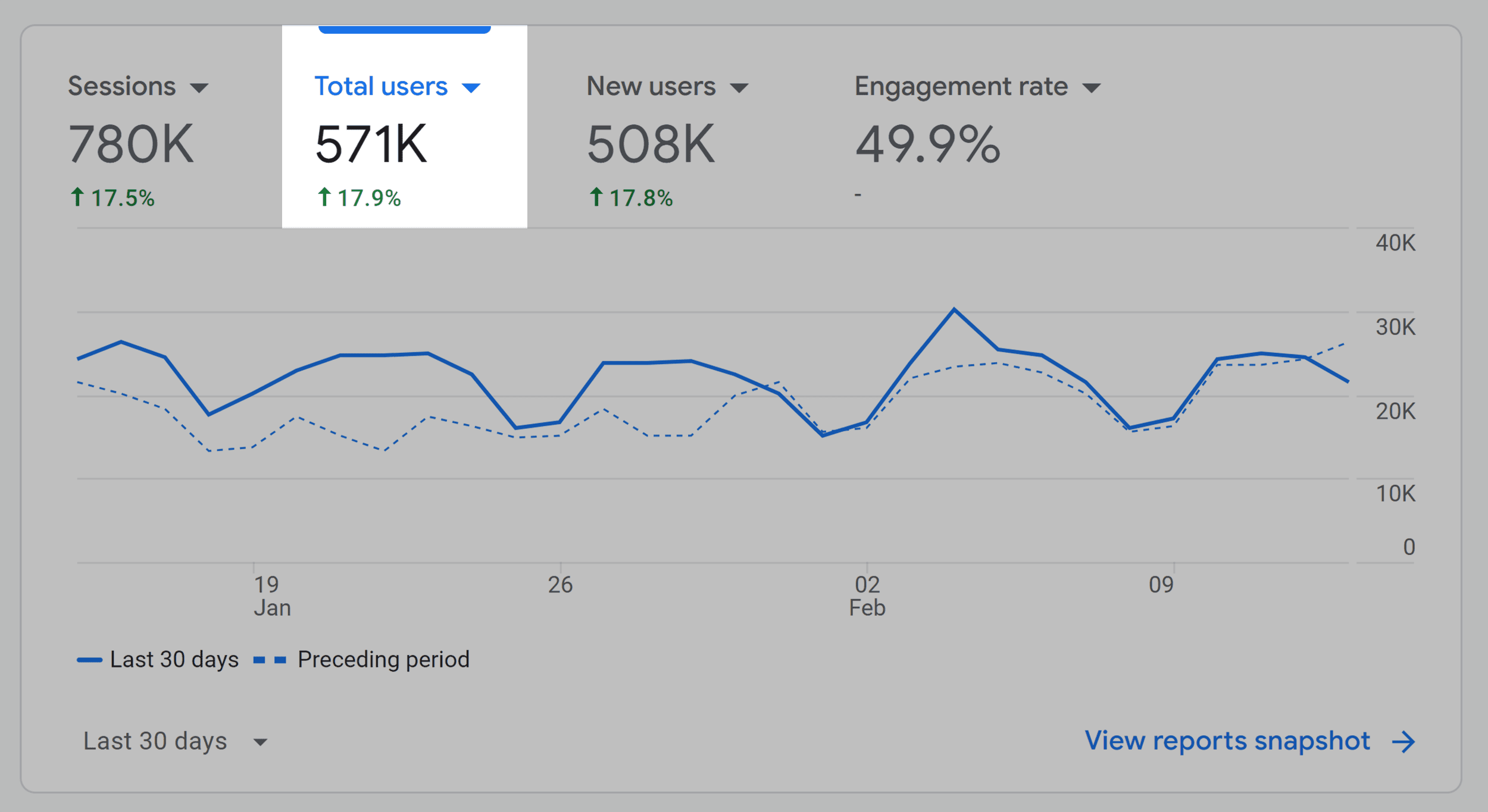
Real data: A 2025 analysis of 100+ sites showed topic cluster implementations averaged 3.2x organic traffic growth in 12 months.
The Topic Cluster Model Explained: Hub-and-Spoke Structure
Topic clusters use a “hub-and-spoke” framework to organize content:
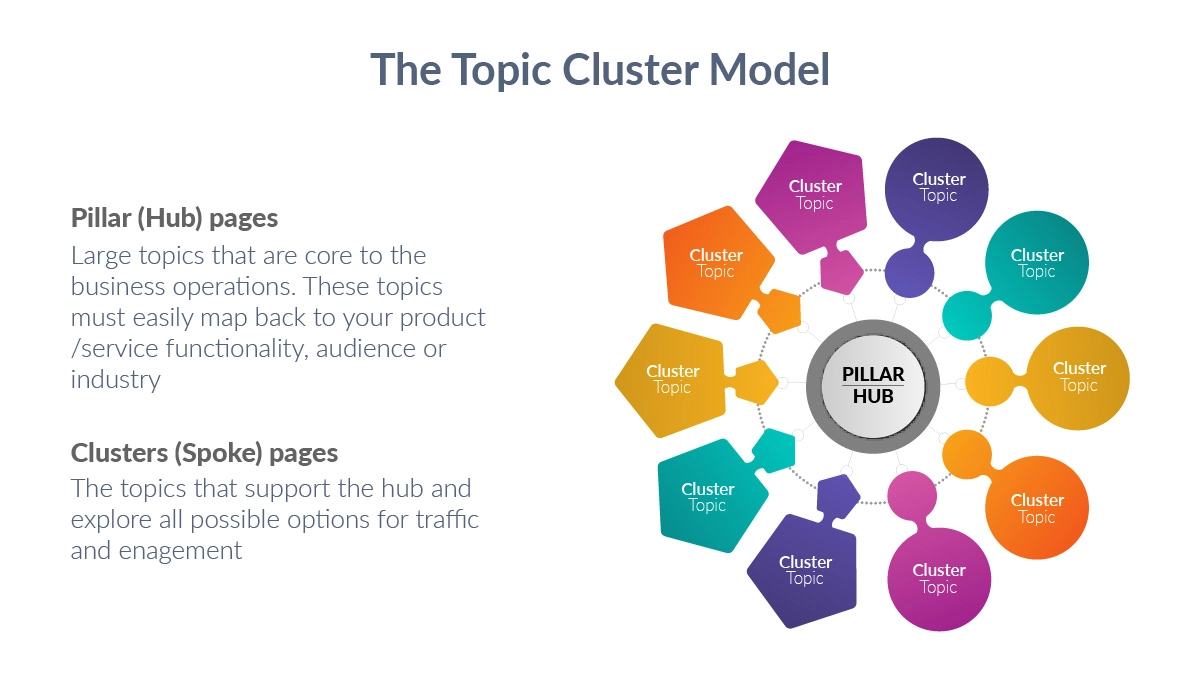
The Pillar Page (Hub)
- Broad, evergreen cornerstone (3,000–7,000+ words)
- Covers the core topic comprehensively
- Links out to all supporting cluster content
Cluster Content (Spokes)
- Targeted, in-depth articles (1,500–3,500 words)
- Focus on subtopics, questions, and long-tails
- Each links back to the pillar + relevant siblings
Internal Linking Magic
- Varied, descriptive anchors
- Builds semantic relationships for crawlers and AI
This model, pioneered by HubSpot, remains the gold standard—evolving with hybrids for URL silos and advanced entity linking.
Real-World Case Studies: Semantic SEO Success Stories
- HubSpot — Early adopters restructured into clusters, fueling massive authority and traffic dominance.
- SaaS Tools — One AI platform grew from 0 to 60K monthly visitors via targeted clusters.
- E-commerce — A niche brand achieved 37,900% blog traffic growth with focused clusters (e.g., pet products).
- Independent Blogs — Creators outrank publishers by owning niche topics deeply.
These prove semantic SEO clusters work across industries.
Step-by-Step: Build a Winning Topic Cluster in 2026
Step 1: Choose Your Core Topic Wisely
Align with expertise and demand. Examples:
- Good: “AI Content Optimization for Blogs”
- Avoid: Overly broad like “Digital Marketing”
Step 2: Semantic Research (Find Gold)
Uncover entities, questions, and gaps:
Tools: AlsoAsked for PAA trees, Ahrefs/SEMrush for clusters, Google Search Console for real queries.
Step 3: Map the Cluster
- 1 Pillar
- 8–15 Supporting pieces (include comparisons, FAQs, tools)
Step 4: Create Optimized Content
- Strong H1–H3 structure
- Front-load answers
- Natural entity mentions
- Schema markup (FAQ, HowTo, Article)
- Visuals, tables, examples
Step 5: Interlink Everything
- Pillar → Clusters
- Clusters → Pillar + cross-links
- Update legacy pages
Step 6: Launch, Monitor & Iterate
- Index via GSC
- Track AI impressions
- Refresh content regularly
Step 7: Scale with Audits
Use tools to spot new opportunities.
Top Semantic SEO Tools for 2026
| Tool | Best For | Pricing | Standout Features |
| Surfer SEO | On-page semantic optimization | Paid (trial) | NLP terms, real-time scoring |
| Clearscope | Content grading & relevance | Paid | Entity suggestions, grading |
| MarketMuse | Authority planning & briefs | Paid | Gap analysis, inventory |
| Ahrefs/SEMrush | Keyword clustering & research | Paid | Topic explorer, difficulty |
| AlsoAsked | Question/PAA trees | Free/Paid | Intent mapping |
| WriterZen | Automatic clustering | Paid | Grouping & outlines |
| Frase.io | AI-assisted briefs | Paid | Quick research |
| InLinks | Entity linking & schema | Paid | Automated internal links |
Common Pitfalls & Fixes in Semantic SEO
- Never updating clusters → Schedule quarterly reviews
- Thin or duplicate content → Prioritize unique depth
- Weak linking → Use contextual anchors
- Ignoring E-E-A-T → Showcase expertise/authorship
- Over-optimizing → Keep natural flow
Future-Proofing Semantic SEO for AI Search
With AI handling 25%+ queries by late 2026, clusters ensure:
- Frequent citations
- Voice & multimodal readiness
- Cross-platform authority
Focus on trust, connectivity, and unmatched helpfulness.
Your Immediate Action Plan
- Audit current content for cluster potential
- Select one high-impact topic
- Research with free tools
- Draft a 4,000+ word pillar
- Publish 6–10 clusters
- Interlink aggressively
- Measure in GSC
Semantic SEO with topic clusters isn’t optional—it’s the path to sustainable dominance.
Final Thoughts
In 2026, ranking isn’t about who has the most backlinks or the highest keyword density. It’s about who owns the topic. Topic clusters powered by semantic SEO let small teams and solo entrepreneurs compete with big brands — because depth and user satisfaction matter more than budget.
Start small. Pick one topic. Build your cluster. Watch your organic traffic grow — not just for one keyword, but for an entire category of searches. Ready to build your first topic cluster? Drop your niche or main topic in the comments — I’ll suggest a starter pillar + cluster structure for you!